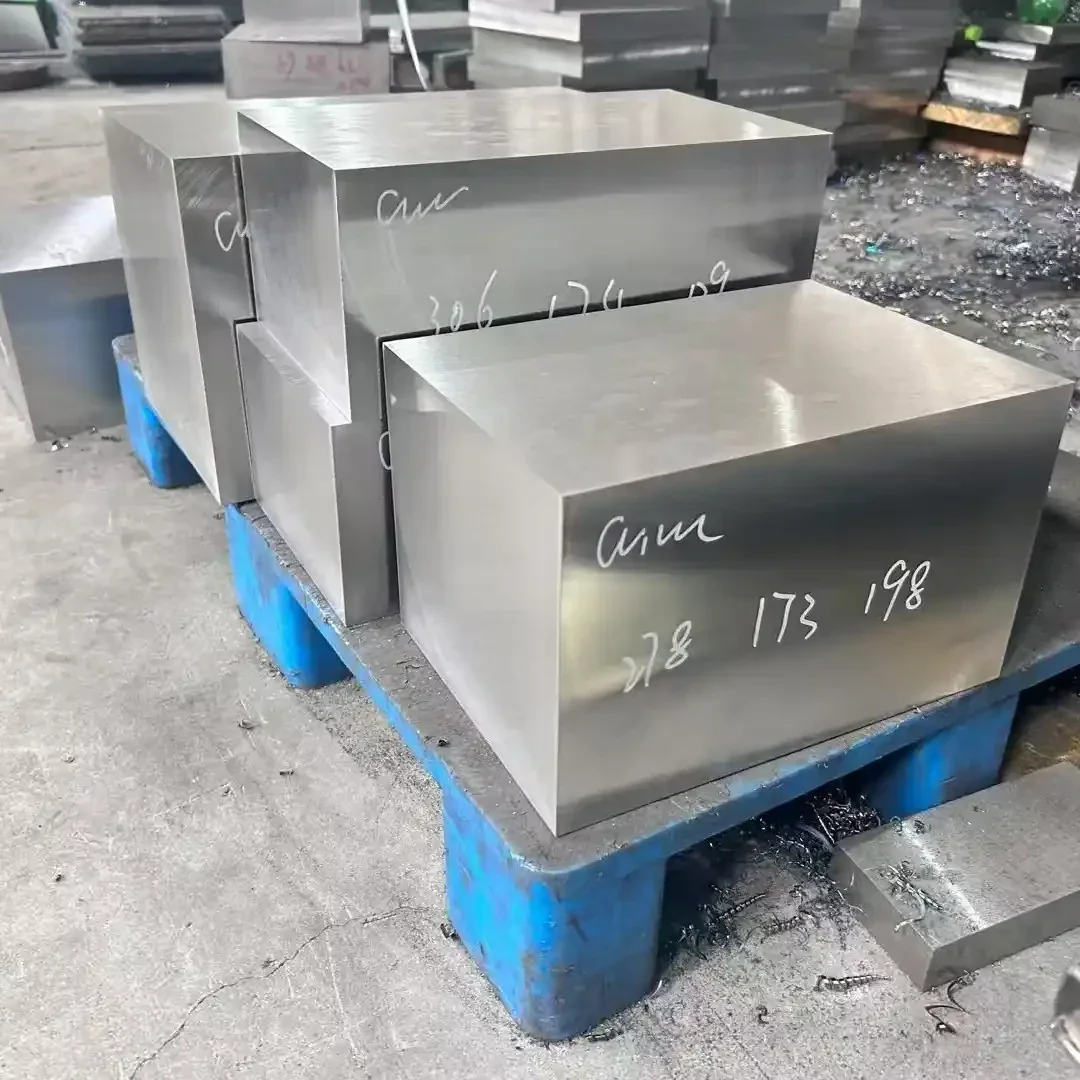
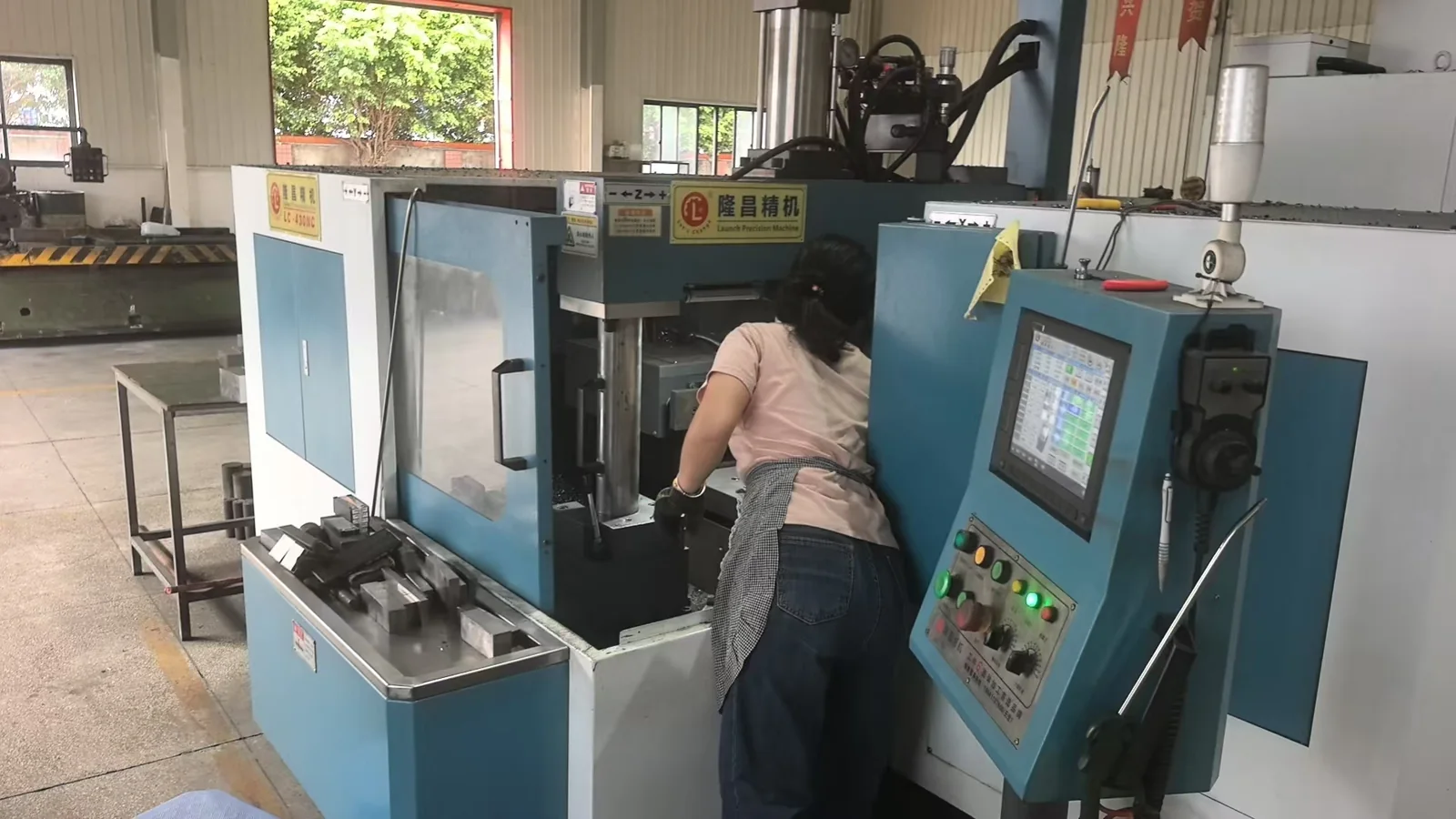
Start With the Finished Faces
Choose milling or grinding by the faces and tolerances needed for the next operation. A description such as precision ground plate does not establish that all six faces are ground. A ground thickness face also does not make a milled length or width dimension subject to the thickness tolerance.
For a quote, state the final length, width and thickness, the surfaces to be finished, the material condition and any allowance for your own machining. If the drawing uses a general tolerance note, identify the standard and revision and confirm its applicability before ordering.
Compare the Three Finishing Routes
| Lichengda process | Length and width | Thickness | Parallelism |
|---|---|---|---|
| Six-side precision milling | ±0.10 mm | ±0.10 mm | 0.08 mm per 100 mm |
| Two-side grinding + four-side milling | ±0.10 mm | ±0.05 mm | 0.04 mm per 100 mm between the two ground reference faces |
| E1 six-side precision grinding | ±0.02 mm | ±0.02 mm | 0.02 mm per 100 mm, within E1 eligibility |
These are the published process specifications. Dimensions, material condition, additional geometric requirements and the actual order scope still need confirmation. Per-100-mm parallelism is not an automatic whole-plate flatness limit or a surface roughness value.
When Two-Side Grinding Is the Relevant Choice
Two-side grinding with four-side milling provides ground thickness reference faces while the length and width remain milled. This route is relevant when the thickness relationship needs the published ±0.05 mm specification and the milled sides meet the requirements for later machining.
Identify which faces establish the thickness and inspection datums. If a pocket, bore, interface or side face needs a different tolerance, show it separately on the drawing. The name of the finishing process does not define every feature on a finished component.
When E1 Six-Side Grinding Is Eligible
E1 is available within a defined envelope: length and width each no more than 600 mm and thickness 10–200 mm. Eligible pre-hardened grades are 718H, 1.2738, NAK80 and 1.2316. Eligible hardened and tempered grades are S136, D2, SKD11 and DC53. Each steel designation remains separate; the list does not establish grade equivalence.
Larger blocks, annealed material and other grades or conditions require separately agreed tolerances. A maximum processing size of 1200×800×400 mm is not an E1 guarantee. Large H13/1.2344 projects should be reviewed for a suitable route instead of inheriting the E1 specification.
Separate Machining Allowance From Acceptance
A machining allowance is material intentionally reserved for a later operation. An acceptance tolerance defines the permitted variation in an ordered dimension. Record whether the requested size is the delivered blank size or the final component size, and which party performs later machining or heat treatment.
If the supplied plate will be heat-treated or substantially machined after delivery, discuss the sequence and the dimensions to be checked at each handover. A tolerance agreed for one delivery condition should not be assumed to describe the part after a different processing stage.
Send a Finish-Specific Inquiry
Include the grade, delivery condition, finished dimensions, quantity, ground or milled faces, drawing revision, datums and report requirements. Name flatness, parallelism, perpendicularity or Ra requirements separately where they matter.
Compare the full plate specifications, browse the grade and finish options or prepare a plate inquiry. PDF, STEP and DWG drawings can be attached in your email app when sending the inquiry to stella@lichengdaheating.com.